Why Your DIY Spa Night Feels Like a Chore (and the 20-Minute Fix)
Quick Answer: A DIY spa night feels like a chore when every step requires a decision — which mask, which oil, what order. Pre-set a fixed 20-minute sequence once, and the same ritual stops feeling like work because your brain stops treating it as a task list.
You have the products. The bath salts, the sheet masks, the good candle you’re ‘saving.’ And somehow spa night still involves standing in the bathroom deciding what to do first, which defeats the entire point of relaxing.
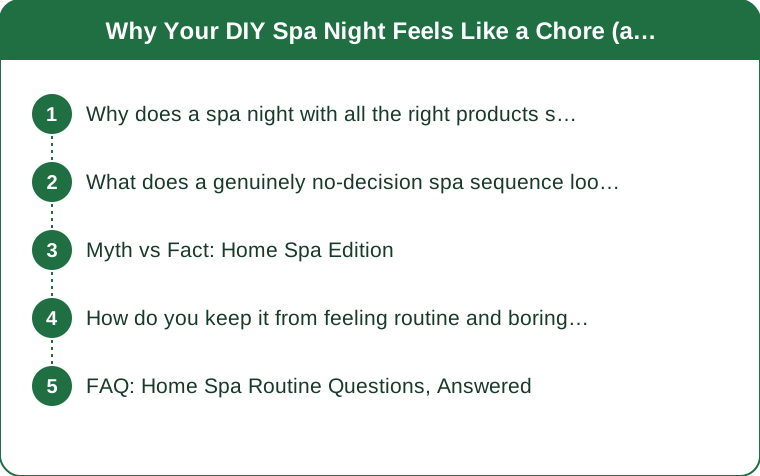
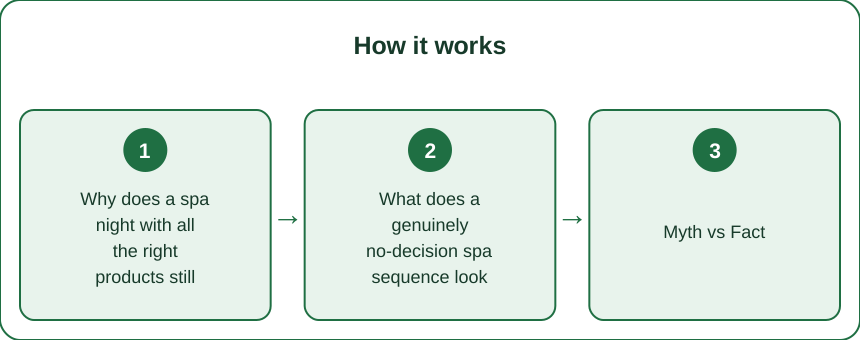
Why does a spa night with all the right products still feel like work?
Decision fatigue. Every unplanned choice — which product, what order, how long — taxes the same mental resource you’re trying to rest. A spa night with 6 micro-decisions isn’t relaxing, it’s just quiet admin.
The fix isn’t more products. It’s removing decisions by fixing the sequence once, so future-you just follows it instead of deciding it.
What does a genuinely no-decision spa sequence look like?
A 20-minute fixed order, same every time: cleanse (2 min) → warm bath or shower (10 min, salts already measured into a jar) → mask on (10 min, timer set immediately) → moisturize while mask sits.
The key move: pre-portion everything the week before — salts in a labeled jar, mask pulled from the box and set out — so nothing during the ritual requires opening a drawer or reading instructions.
Myth vs Fact: Home Spa Edition
Myth: More products means a better spa night. Fact: Past 3-4 steps, added products add decision fatigue faster than they add benefit. A focused 3-step routine outperforms a cluttered 8-step one for actual relaxation.
Myth: You need an hour for it to count. Fact: A tightly sequenced 20 minutes with zero decisions relaxes the nervous system more reliably than a loose 90 minutes spent wandering between products.
Myth: Ambiance (candles, music) is the main variable. Fact: Ambiance helps, but removing decision-making is the bigger lever — a spotless routine in a plain bathroom beats a decision-heavy one surrounded by candles.
How do you keep it from feeling routine and boring instead?
Rotate one variable only — the mask type or the scent — while keeping the sequence and timing fixed. Novelty in one place, automation everywhere else, is what keeps a ritual feeling special instead of stale.
Also worth trying: a phone-away rule for the full 20 minutes. Even a relaxing routine loses most of its nervous-system benefit if you’re checking notifications between steps.
FAQ: Home Spa Routine Questions, Answered
How often should you do a home spa night?
Once a week is enough to matter and rare enough to still feel special. Nightly ‘spa’ routines tend to collapse into just skincare, losing the ritual effect entirely.
What’s the minimum home spa setup?
A bath or basin, one mask, one oil or lotion, and a timer. Everything past that is optional — the sequence matters more than the product count.
Why do spa nights feel different from just showering?
Intentional pacing and zero multitasking activate a different stress response than a rushed shower — the slowness is the active ingredient, not the products themselves.
TL;DR:
- Feeling like a chore usually means too many in-the-moment decisions
- Fix a 20-minute sequence once; pre-portion products the week before
- 3-4 focused steps relax more than 8 scattered ones
- Keep phone away and rotate only one variable to avoid staleness
Design the ritual once, then stop deciding — that’s what turns spa night from a task into an actual reset.
Keep Reading
This article is for general informational and styling purposes only. Fit, sizing, and product availability may vary.