7 Home Spa Steps That Work Better on Damp Skin
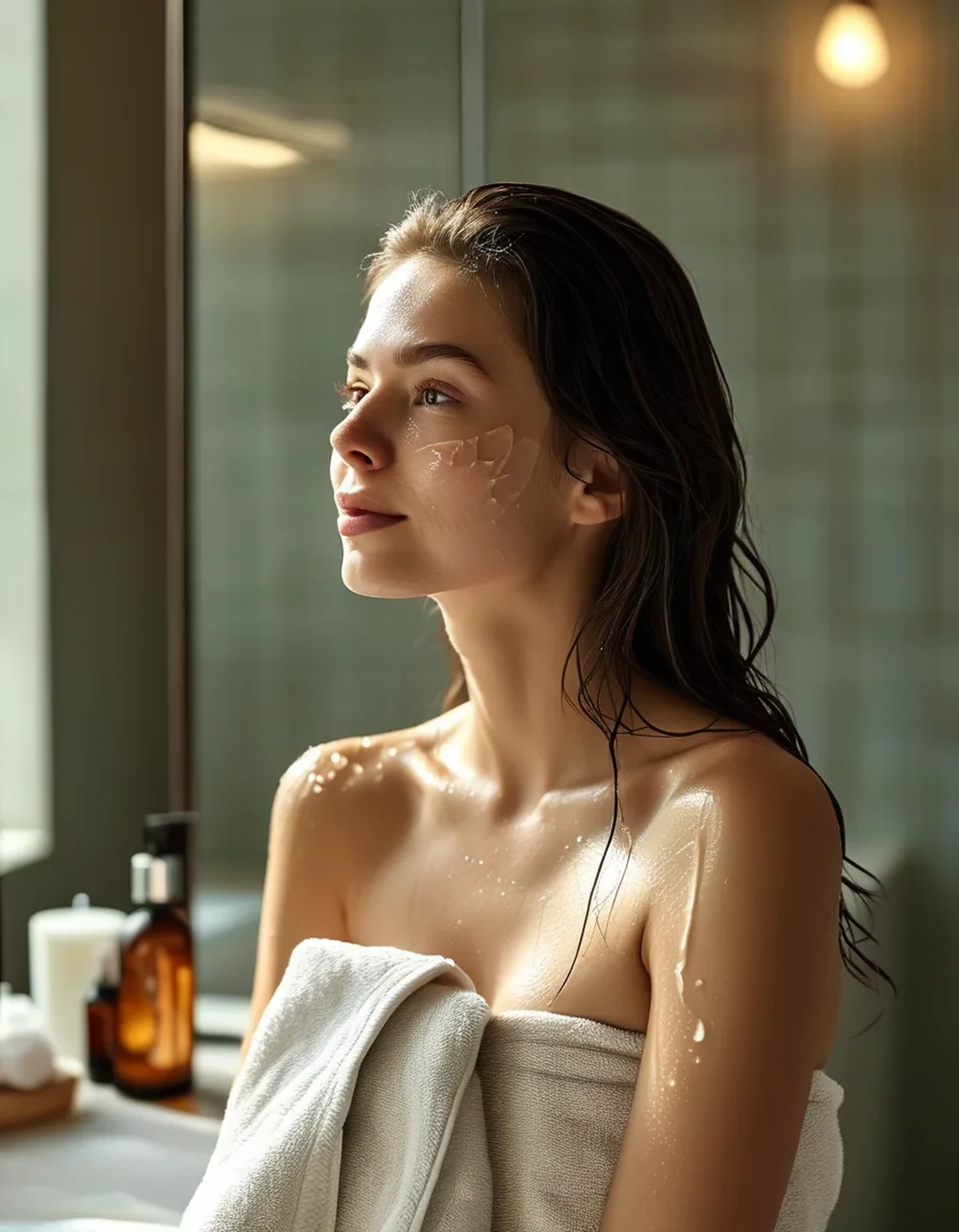
Quick Answer: Several of the products in a home spa routine work measurably better applied to damp skin rather than dry, because humectants pull water from whatever is available - and on dry skin in dry air, that can mean pulling it out of your own deeper layers rather than into them. The steps that benefit are humectant serums, most moisturizers, body lotion, hair masks and oils. The steps that do not are actives, most treatment masks and anything designed for controlled absorption. The window is roughly 60 seconds after patting dry - long enough to be practical, short enough that people miss it.
You have been doing the routine in the right order with the right products and getting a result that never quite lands.
Seven of the steps have a timing variable nobody mentions on the packaging.
1. Humectant serums - hyaluronic acid especially
This is the one where dry application can actively work against you.
Humectants are ingredients that attract and bind water - hyaluronic acid, glycerin, urea, sodium PCA. They pull water from wherever they can find it. In a humid environment, that means pulling from the air. In a dry environment applied to dry skin, the most available water is in your own deeper skin layers, which is the opposite of the intended effect and is why some people find hyaluronic acid serums make their skin feel tighter.
Applied to damp skin, there is surface water available to bind, and a moisturizer layered over the top seals it in place.
The practical routine: cleanse, pat - do not rub - until the skin is damp rather than wet, apply the humectant serum within about a minute, then follow with a moisturizer or cream to occlude.
Indoor air matters more than you think here. Once heating comes on, indoor relative humidity in many homes drops substantially, and this is precisely the condition where dry-skin humectant application is least helpful.
The tell: if your hyaluronic acid serum has ever made your skin feel tighter rather than plumper, you were applying it dry in dry air. Same product, changed timing, different result.
2. Moisturizer, and the three-minute rule
The most researched version of this principle, and the one dermatologists actually repeat.
The commonly cited guidance is to apply moisturizer within about three minutes of getting out of the bath or shower, while the skin is still damp. The rationale is straightforward: water in the skin is what makes skin feel soft, and the moisturizer’s job is largely to slow its escape.
After a shower the stratum corneum is transiently hydrated. Transepidermal water loss then proceeds quickly - the majority of that surface hydration is gone within a fairly short window, and applying an occlusive or emollient before that happens traps a meaningfully higher water content.
This matters most for body skin, which people neglect and which is drier to begin with - fewer sebaceous glands on the shins and forearms than on the face.
The technique detail: pat, do not rub. Vigorous towel drying removes the surface water you are trying to keep and mechanically irritates the barrier. Damp means visibly damp, not wet enough that product slides off.
And apply more than feels necessary on the body. Most people use a fraction of what would be effective, and on damp skin a thicker application spreads much further than the same amount on dry skin - which makes generous application cheaper, not more expensive.
3. Body oil, which is the most misapplied product in the routine
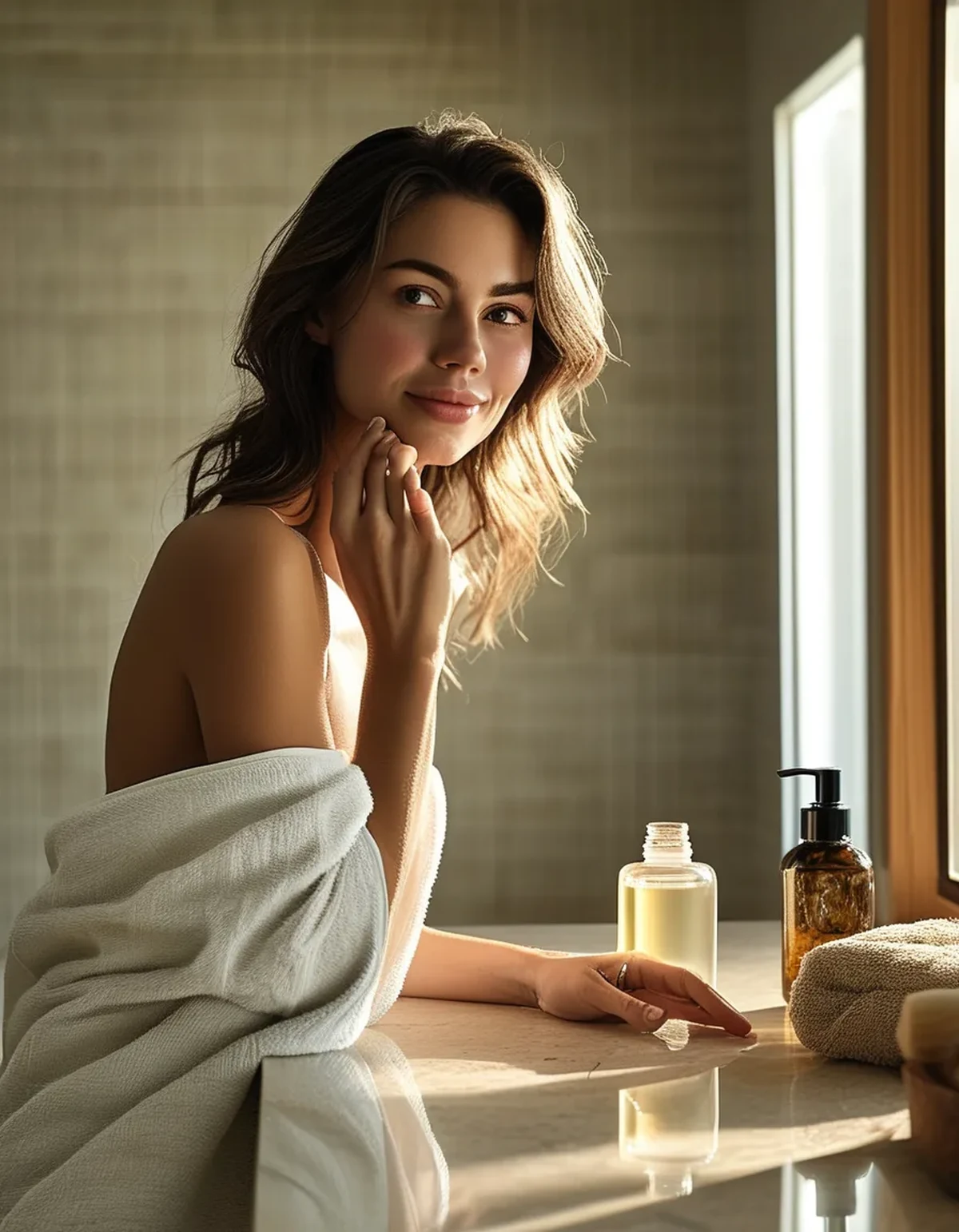
Oil on dry skin seals in dryness. Oil on damp skin seals in water.
Body oils and facial oils are almost entirely occlusive and emollient - they do not add water, they slow its loss and smooth the surface. Applied to genuinely dry skin, they create a barrier over skin with low water content and the result is skin that feels smooth and stays dehydrated.
Applied to damp skin, the same oil traps the water that is already there. The difference in how the skin feels four hours later is substantial, and it costs nothing to change.
Order matters if you use both oil and cream. Oils are generally the more occlusive of the two, so oil goes after a water-based product, not before - a cream applied over an oil has a harder time getting through.
The in-shower version is worth knowing. Applying oil in the shower, in the last thirty seconds with the water off, then patting dry over the top, is faster than the post-shower version and less messy. The film left behind after patting is thinner and more even than most people manage with a post-shower application.
Skip this on skin that is broken, freshly shaved or irritated - occlusion over irritation traps heat and can worsen it.
4. Hair masks and conditioners
Most conditioning products are formulated for wet hair, and most deep masks are formulated for damp - which is a real distinction.
Regular conditioner is designed for wet hair. The cationic conditioning agents in it deposit onto the hair surface from a water-diluted state, and applying to soaking hair is intended.
Deep conditioning masks are different. Hair that is dripping wet has already absorbed close to its capacity of water, and a mask applied over that has less opportunity to penetrate. Squeezing out excess water first - damp, not dripping - is the standard professional recommendation, and it produces a visibly different result on the same product.
The temperature detail: warmth increases penetration by lifting the cuticle. A shower cap or a warm towel over a mask for ten to fifteen minutes does more than doubling the product would.
Leave-in products and oils go on damp hair, not dry. On dry hair they sit on the surface and weigh it down; on damp hair they distribute evenly and dry into the strand.
And the rinse temperature at the end genuinely matters. A cool final rinse helps the cuticle lie flatter, which is the main mechanism behind the shine difference people notice - not the product.
5. Exfoliation, which is the exception that catches people out
Physical exfoliation on damp skin is gentler. Chemical exfoliation on damp skin is stronger. These pull in opposite directions.
Physical scrubs work better on damp skin because water provides slip, which reduces the mechanical drag that causes micro-tears. A scrub on dry skin is significantly more abrasive at the same pressure.
Chemical exfoliants are the opposite. Acids - AHAs, BHAs - penetrate more readily and act more strongly on damp skin, because water increases stratum corneum permeability. This is why most acid products specify application to clean, dry skin, and why people who apply them straight out of the shower sometimes get more irritation than they expected from a product they have used for months.
The rule that resolves it: scrubs and physical exfoliation, damp. Acids and enzymes, dry.
This is also the single most common reason a home spa night ends in irritation. Warm shower, damp skin, an acid toner applied out of habit, then a mask on top of that - each step reasonable, the combination considerably stronger than intended.
If you are doing both in one session, physical exfoliation in the shower and chemical exfoliation on a different night is the safer structure. Layering them on the same evening is how a routine that worked all summer starts stinging in October.
6. Sheet masks and the step after them
The mask is the easy part. What you do in the ninety seconds after determines whether it worked.
A sheet mask leaves skin saturated with a water-based essence. That essence evaporates, and if nothing occlusive follows, a meaningful portion of the hydration you just delivered leaves with it - sometimes taking a little extra with it as it goes.
Do not rinse, do pat in the residue, and then seal. A moisturizer over the top within a minute or two of removing the mask is what converts a temporary plumping effect into something that lasts through the next day.
Timing on the mask itself is a real variable. Leaving a sheet mask on until it dries out is counterproductive for exactly the same reason - a drying sheet on the face starts working in reverse, evaporating and pulling moisture with it. The instruction to remove after fifteen to twenty minutes is not conservative packaging language.
Cold masks are worth a mention since they are commonly recommended for puffiness. Refrigerating a sheet mask does produce genuine transient vasoconstriction and reduces puffiness. The effect is temporary and cosmetic, which is fine - just do not expect it to be doing anything more.
And the underrated version: on a night where you are not doing a full routine, damp skin plus a good moisturizer outperforms dry skin plus an expensive serum. Consistency of the basic step beats occasional use of the sophisticated one.
7. The foot and hand treatments, where occlusion does the work
These are the two areas where the damp-skin principle produces the most visible overnight difference.
Hands and feet have thick stratum corneum, high mechanical stress, and - on the palms and soles - no sebaceous glands at all. They cannot self-lubricate, which is why they crack in dry air while the rest of the skin copes.
The high-impact routine is simple and it depends entirely on damp application. Soak or shower, pat until damp, apply a thick urea or lactic acid based cream immediately, then cover with cotton socks or gloves overnight.
The covering is not a gimmick. It provides sustained occlusion for eight hours, which is a completely different exposure from a cream that absorbs or rubs off in twenty minutes. This one change produces more visible improvement in cracked heels than any product upgrade will.
Urea is the ingredient worth seeking out for feet specifically - it is both a humectant and a keratolytic, so it hydrates and softens thickened skin at the same time. Concentrations around 10 percent are moisturizing; higher concentrations are more strongly keratolytic.
Timing this for the end of summer is deliberate. Feet after a summer of sandals and bare floors are at their most callused, and starting the routine now means the cracking that usually arrives with the first weeks of heating does not.
This is general information, not medical advice. Cracks that bleed, are painful, or are slow to heal - particularly for anyone with diabetes or circulatory issues - should be seen by a clinician rather than treated at home.
TL;DR:
- Humectants applied to dry skin in dry air can pull water from deeper layers - apply damp, then seal.
- Moisturizer within about three minutes of the shower, patted not rubbed, is the best-supported version of this principle.
- Oil on dry skin seals in dryness. Oil on damp skin seals in water.
- Hair masks want damp, not dripping - fully saturated hair has less room to absorb.
- Scrubs on damp skin, acids on dry. Getting this backwards is the main cause of home spa irritation.
- Seal a sheet mask within a minute and remove it before it dries out.
- Damp application plus overnight cotton socks does more for cracked heels than any product upgrade.
This is general information, not medical advice. Most of these cost nothing to change - only when you do them.
Keep Reading
This article is for general informational and styling purposes only. Fit, sizing, and product availability may vary.