7 Reasons Your Home Spa Night Never Feels Restful
Quick Answer: Home spa evenings usually fail on logistics rather than products — a room that is too cold, a phone still in reach, a routine that requires decisions, and a start time too late to matter. Fixing the environment and removing choices does more than any mask or oil will.
The candles are lit. The bath is run. Twenty minutes later you are damp, slightly cold, holding your phone, and thinking about tomorrow.
Here are the seven reasons this happens, in the order they usually do the damage.
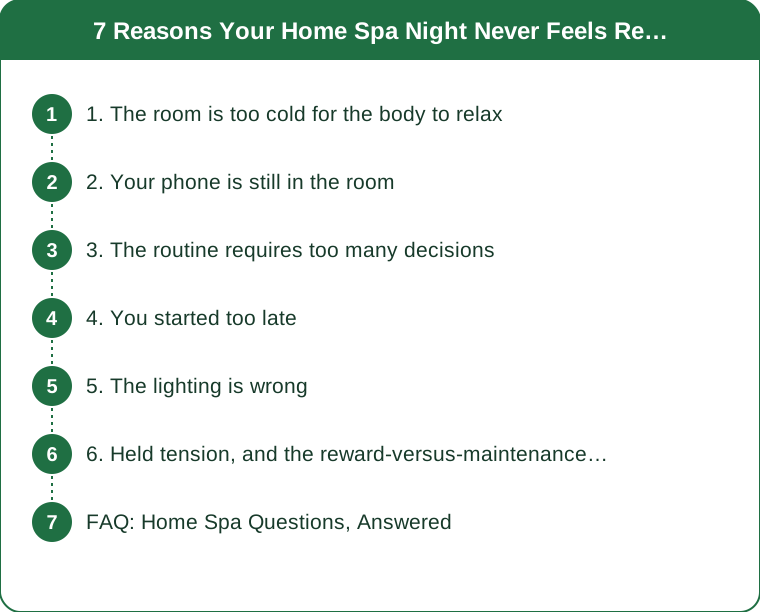
1. The room is too cold for the body to relax
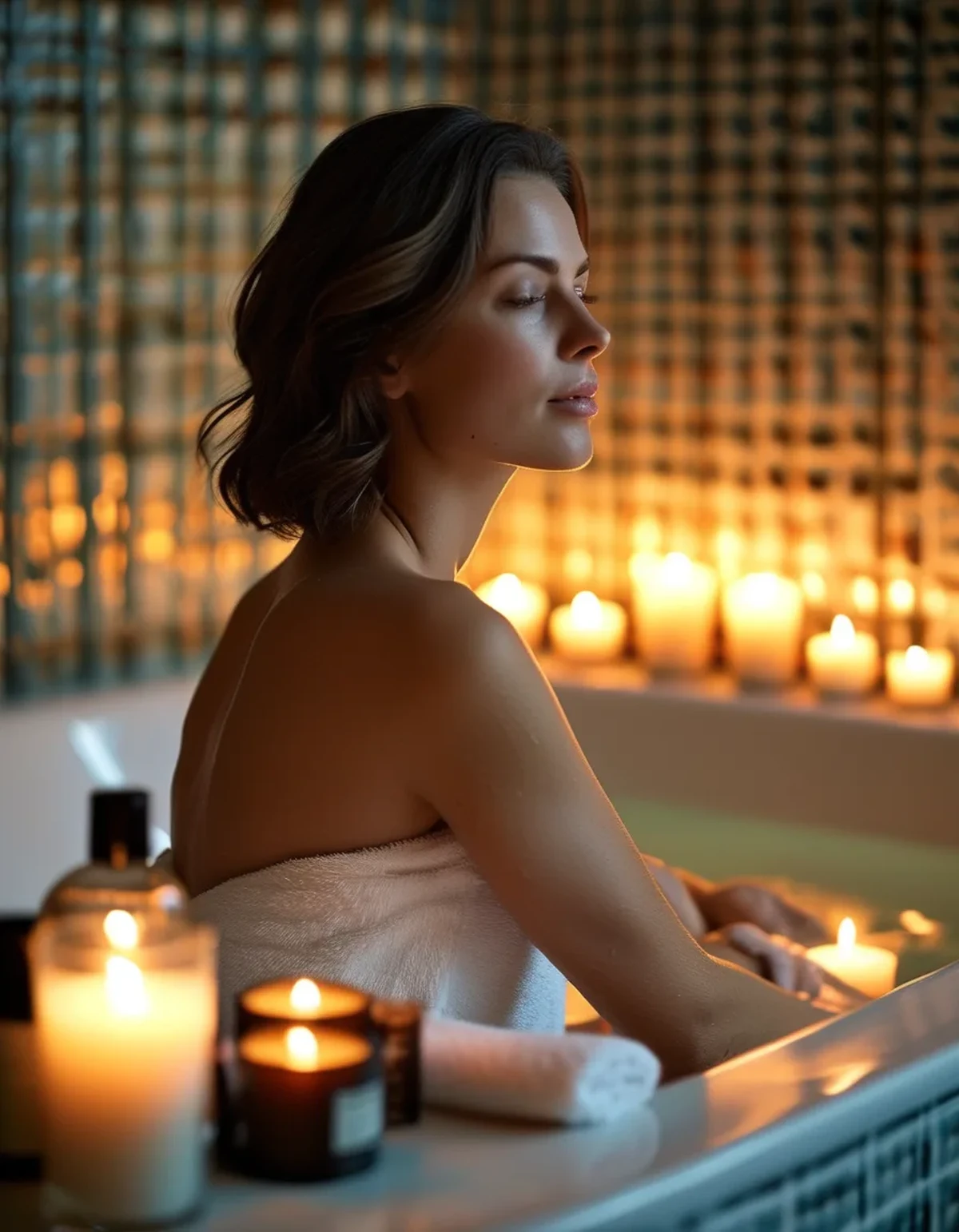
This is the most common failure and the least glamorous.
Relaxation has a physiological component and temperature is a large part of it. In a cool room, the body maintains peripheral vasoconstriction — blood held away from the skin — and muscle tone stays slightly elevated to generate heat. You cannot feel deeply relaxed while your body is actively working to stay warm, no matter what is in the bath.
The transitions are worse than the steady state. Getting out of a warm bath into a 17°C bathroom produces a sharp drop as water evaporates from skin, which is genuinely unpleasant and ends the mood in about four seconds.
The fix: heat the bathroom for 15 minutes before you start, not while you are in it. Put towels and a robe somewhere warm — over a radiator, or in the dryer for five minutes. Close the door and let the steam raise the ambient temperature.
If your bathroom cannot be heated, move the routine somewhere that can. A face mask and a foot soak in a warm bedroom beats a full bath in a cold room every time.
2. Your phone is still in the room
A phone within reach converts a spa evening into a slightly damp continuation of your day.
The mechanism is not just distraction, though that is bad enough. It is anticipation. Even face-down and silent, a phone in the room keeps a small part of your attention allocated to possible incoming demands. The nervous system does not fully downshift while it is monitoring for interruption.
Music complicates this, because most people play music from the same device. The solution is a separate speaker, a smart speaker, or setting a playlist and then physically leaving the phone in another room.
The fix: phone stays outside the room. If you use it as a timer, use a physical timer or simply do not time anything. If you use it for music, start the playlist and walk it out.
The uncomfortable test: if the idea of leaving your phone in another room for 45 minutes produces genuine resistance, that resistance is itself the thing the evening was supposed to address.
3. The routine requires too many decisions
Choosing between four masks while standing in a towel is not restful, and decision-making is the specific mental activity you are trying to switch off.
Most home spa evenings are assembled improvisationally: what products do I have, what order, how long, do I do the feet before or after. Each of those is a small executive-function task, and stacked together they keep the analytical part of your brain running through an evening designed to quiet it.
The fix: decide the sequence once, write it down, and then never decide again. A fixed routine — cleanse, mask, soak, oil, robe, herbal tea, bed — becomes automatic within three repetitions, and automatic is the state you are after.
Lay everything out before you start, in order, within reach. The setup is part of the ritual, not a chore preceding it. Five minutes of arranging beforehand removes every interruption later.
This is also why professional spas feel different. Someone else made all the decisions, and your only job is to lie there.
4. You started too late
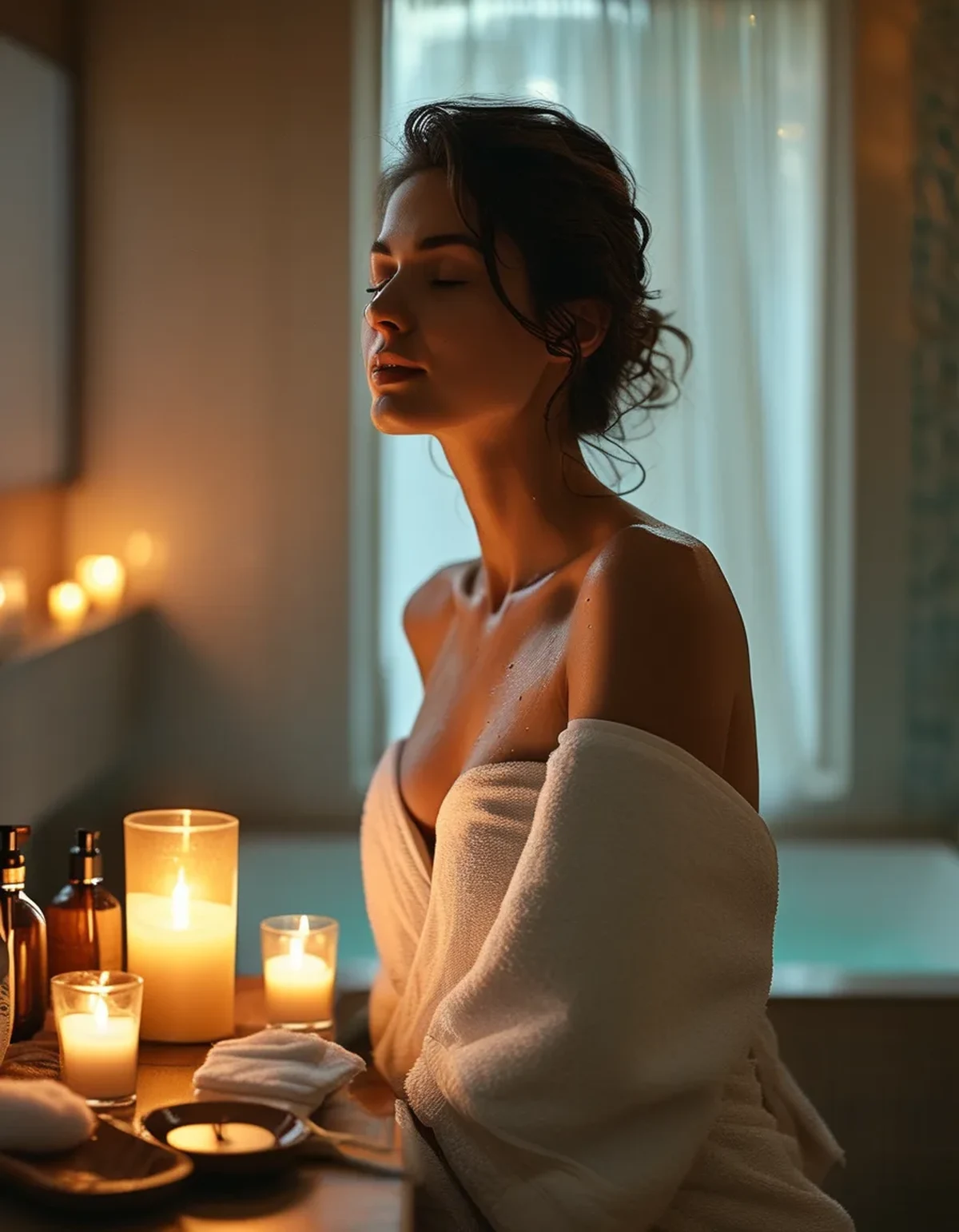
A spa evening beginning at 22:30 is competing with sleep, and it will lose.
Most people schedule the routine after everything else is done, which means it starts when they are already too tired to enjoy it and ends with them rushing the last part to get to bed. The relaxation never lands because the whole thing is under time pressure.
There is also a temperature-and-sleep interaction worth knowing. A warm bath 60 to 90 minutes before bed genuinely helps sleep onset, because the subsequent drop in core temperature as you cool signals sleep. A bath 15 minutes before bed can do the opposite, leaving core temperature elevated at exactly the wrong moment.
The fix: start earlier than feels natural — around 19:30 to 20:30 for a 22:30 bedtime. Treat it as an evening activity rather than a pre-bed chore.
Shorter and earlier beats longer and later. Thirty unhurried minutes at eight o’clock delivers more than ninety pressured minutes at eleven.
5. The lighting is wrong
Overhead bathroom lighting is typically bright, cool-toned, and directly above — which is close to the opposite of what promotes a relaxed state.
Bright light in the evening, particularly with a blue-weighted spectrum, suppresses melatonin and keeps the visual system in an alert mode. Bathroom lighting is usually designed for tasks like shaving and applying makeup, which means high illumination and high colour temperature.
The fix: candles are the obvious answer and they work, but a single warm lamp does the job just as well and does not require supervision. A cheap warm-white bulb in a portable lamp, or a string of warm lights, transforms the room for very little money.
Dim is more important than atmospheric. Under about 50 lux — roughly candlelight to soft lamp level — the physiological signals are quite different from a room at 300 lux, which is a normal bathroom.
If you cannot change the fixture, turn the main light off entirely and use light from the hallway. Almost anything beats the overhead.
6. Held tension, and the reward-versus-maintenance trap
Warm water is passive. It helps, but it does not release muscle tension that is being actively maintained — and by evening, most people are maintaining a lot of it in the jaw, neck, shoulders, and hip flexors.
This is why some people report soaking for forty minutes and getting out feeling exactly the same. The bath addressed skin temperature; nothing addressed the pattern of held tension that has been building since morning.
The fix: add five to ten minutes of something active before or during the soak. Not exercise — release work. A few slow neck rotations, shoulder rolls, a jaw release by letting the mouth hang open, a supported forward fold, and three minutes of slow breathing with an extended exhale.
The extended exhale is the highest-value item on this whole list. Breathing in for four and out for eight, for ten cycles, shifts autonomic balance measurably. It costs nothing and works whether or not there is a bath involved.
Adding this single component is what turns a nice bath into an evening that actually changes how you feel.
7. You are treating it as a reward instead of maintenance
The framing matters more than it sounds, because it determines frequency, and frequency determines effect.
A spa evening treated as an occasional reward happens when you are already depleted, arrives too late to prevent anything, and carries an expectation of transformation that a bath cannot meet. When it does not deliver, the conclusion is that it does not work.
Treated as maintenance — a modest, regular practice at a fixed point in the week — it becomes cumulative. A 30-minute version every Sunday does considerably more than a two-hour version every eight weeks, in the same way that a weekly walk beats an annual hike.
The fix: shrink it and schedule it. A fixed evening, a fixed short sequence, no requirement for it to be special. Same principle as any habit: consistency over intensity.
The short version of all seven
Warm the room and the towels. Phone in another room. Same sequence every time, laid out in advance. Start by 20:30. One warm lamp, overhead light off. Five minutes of breathing and neck release. Every week, not every season.
FAQ: Home Spa Questions, Answered
Do bath products actually do anything?
Epsom salts, oils, and bath milks mostly affect skin feel and scent, and scent has a genuine, if modest, effect on mood and perceived relaxation. Claims about magnesium absorption through the skin are not well supported. Buy them because you like them, not because of the mechanism on the packaging.
Is a shower version possible if I do not have a bath?
Yes, and it works better than people expect. A hot shower with the lights low, a scrub, a hair mask left in while you stand there, and then the same breathing and release work in a warm room afterwards covers most of what matters. The bath is a delivery vehicle, not the active ingredient.
How long should the whole thing take?
Thirty to fifty minutes is the sweet spot for most people. Beyond an hour, attention tends to wander back to the day’s concerns, and very long baths leave skin uncomfortably wrinkled and can leave you feeling washed out rather than restored.
TL;DR:
- Cold rooms make relaxation physiologically impossible — heat the space and the towels first.
- Remove the phone entirely; the anticipation alone keeps the nervous system alert.
- Fix the sequence so no decisions are required, and lay everything out in advance.
- Start by 20:30, use one warm lamp, and include five minutes of breathing with a long exhale.
- Make it weekly and short rather than rare and elaborate.
The products are the least important part, which is inconvenient given they are the part that gets marketed. Warmth, darkness, no phone, and a long exhale are free.
Keep Reading
This article is for general informational and styling purposes only. Fit, sizing, and product availability may vary.