The Sunday Wind-Down Hour: A Weekly Spa Ritual for the Week Ahead
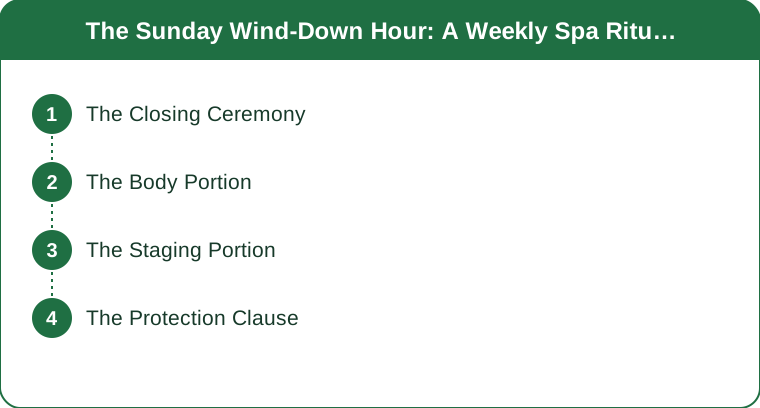
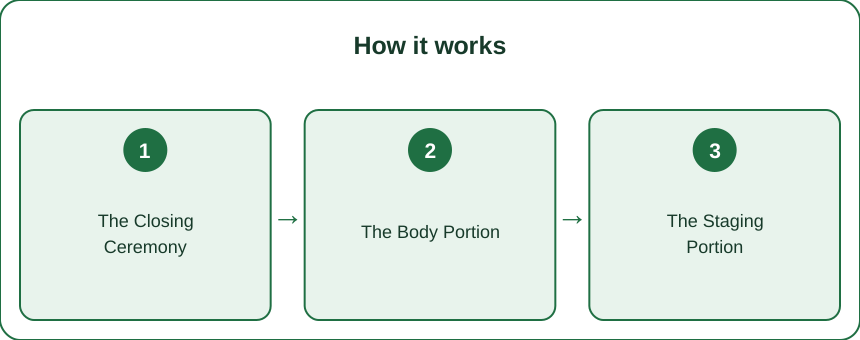
Quick Answer: A Sunday wind-down hour has three parts: close the weekend on paper (10 minutes of journaling — what was good, what’s coming, what can wait), a warm bath or deliberate shower plus unhurried skincare (30 minutes), and 15 minutes staging Monday (outfit hung, bag packed, lunch sorted). Same hour every week, phone in another room. It works because it replaces vagueness with a plan.
Sunday evening has a default setting, and it’s the scaries: tomorrow’s inbox quietly haunting tonight’s couch, three hours before you’ve done anything about it.
The counter-programming isn’t willpower. It’s ritual — a weekly hour that ends the weekend deliberately instead of letting it dribble out, and stages the week from calm rather than dread.
Spa element optional. Strongly recommended.

Why Do the Sunday Scaries Happen?
Because the week ahead exists as a vague cloud rather than a list.
Anticipatory anxiety feeds on ambiguity. “Lots to do tomorrow” is far more distressing to sit with than “three meetings, a report draft, and a dentist appointment at 4” — even when the second version is objectively more work. Your brain treats an undefined threat as a large one.
Two other contributors:
- The weekend never formally ended. It faded into Sunday evening while you were half-watching something, so there was no transition point.
- Sunday sleep is often the worst of the week, because the schedule drifted and the anxiety arrived at bedtime.
So the ritual does two jobs: it defines the week (which deflates the vagueness) and it marks a transition (which gives the weekend an ending).
What Happens in the Closing Ceremony?
The first ten minutes, and the part people skip.
Park the screens. Phone in another room, not face-down on the sofa. This is the load-bearing instruction.
Write one page. Three prompts, handwritten if possible:
- What was good about this weekend? Two or three things. It marks the weekend as having happened, which is more than most weekends get.
- What’s actually coming this week? Specific items, not feelings. Meetings, deadlines, appointments, the one difficult conversation.
- What can wait? The most useful prompt. Half of what’s crowding your Sunday evening is not due this week and does not need to be carried.
The scaries feed on vagueness. The page starves them.
If a to-do list is more your speed, do that instead — the mechanism is getting the mental tabs out of your head and onto something you can close.
What’s the Body Portion?
A warm bath or a deliberate shower, about 20 minutes.
There’s a sleep-science angle here worth knowing: a warm bath 1–2 hours before bed raises skin temperature, which triggers heat dissipation and a subsequent drop in core body temperature — and that drop is one of the signals that initiates sleep. Studies on pre-bed warm bathing consistently find improved sleep onset. Convenient, given you were going to do it anyway.
Then the full unhurried skincare sequence. Cleanse, treat, moisturise, and a mask if you have one — partly for the skin, mostly because a mask enforces ten minutes of sitting still, which is otherwise almost impossible to schedule.
Optional additions that cost nothing: dim the lights rather than working under the overhead, put on something instrumental, and moisturise your feet, which is the small unglamorous thing that makes Monday better in a way nobody expects.

What Does Staging Monday Involve?
Fifteen minutes of future-kindness. Every staged item is a decision Monday-morning-you doesn’t have to make.
- Monday’s outfit hung up, complete — shoes, accessories, the whole thing. Not “picked out mentally.”
- Bag packed — laptop, charger, gym kit, anything you’ll need.
- Lunch components confirmed, or the ingredients pulled to the front of the fridge.
- Keys, badge, wallet in the one place they live.
- Coffee set up if your machine allows.
- Calendar glanced at once, so nothing is a surprise. Once. Not a full work session in disguise — this is the trap, and it turns the wind-down hour into overtime.
Here’s the thing nobody expects: the spa hour and the logistics hour turn out to be the same hour, and doing them together is why the ritual survives. Pure self-care feels indulgent and gets dropped; pure logistics feels like work and gets dropped. Together they’re a genuinely nice hour that also solves Monday morning.
What Nobody Tells You About Sunday Rituals
The hour has to be scheduled or it evaporates. Same time every Sunday — 7pm is a common choice. Tell the household. Put it in the calendar like a real appointment, because a ritual that happens “when things calm down” happens roughly four times a year.
Skip weeks are fine and don’t mean anything. The ritual resumes without ceremony and without a debrief. Treating a missed week as a failure is the single most common reason people abandon habits like this.
The order matters. Journaling before the bath, not after — otherwise you’re lying in warm water thinking about Tuesday, which defeats the entire exercise.
It won’t work on the first Sunday. The effect is cumulative. Give it four weeks before judging it; a year of Sunday hours is what quietly changes what Mondays feel like.
Sunday-night sleep is the real prize. If you only measure one thing, measure whether you fell asleep more easily. That’s usually where the change shows up first.
When to see a professional: if Sunday dread has become genuine, persistent anxiety — or if it’s present most days rather than one evening a week, or it’s paired with low mood, poor sleep and loss of interest in things you enjoy — that’s worth talking to a doctor or therapist about. A ritual helps with ordinary Sunday-evening unease; it isn’t treatment for an anxiety disorder.
How do I stop the Sunday scaries?
Give the week a shape before it arrives. Ten minutes writing down what’s actually happening — and what can wait — deflates the vague dread far more effectively than distraction. Then stage Monday physically: outfit, bag, lunch, keys.
What should a Sunday reset routine include?
A closing element (journaling or a list), a body element (bath or shower plus skincare), and a staging element (outfit, bag, lunch, calendar glance). About an hour total, at the same time every week.
Does a warm bath before bed actually help you sleep?
There’s reasonable evidence for it. A warm bath 1–2 hours before bed raises skin temperature and prompts the core-temperature drop associated with sleep onset. Studies on pre-bed warm bathing find improved time-to-sleep and sleep quality.
TL;DR:
- Sunday dread feeds on vagueness — the fix is definition, not distraction.
- 10 minutes journaling: what was good, what’s coming, what can wait.
- Warm bath 1–2 hours before bed + unhurried skincare. The mask is really a stillness enforcer.
- 15 minutes staging Monday: outfit hung, bag packed, lunch sorted, keys placed.
- Journal before the bath, or you’ll spend the bath thinking about Tuesday.
- Same hour weekly, phone in another room, skip weeks without ceremony.
Keep Reading
This article is for general informational and styling purposes only. Fit, sizing, and product availability may vary.