7 Reasons Your At-Home Spa Day Feels Like a Chore Instead of Self-Care
Quick Answer: At-home spa days feel like chores when they’re built around a checklist of products instead of an actual mood — cut the routine down to 3 steps you enjoy, set a timer to stop planning and start relaxing, and the ‘chore’ feeling usually disappears.
You blocked out the whole evening, bought the face masks, lit the candle — and somehow it still felt like doing laundry with extra steps. If your spa night keeps feeling like a task instead of a treat, one of these 7 things is probably why.
1. You’re following someone else’s 12-step routine
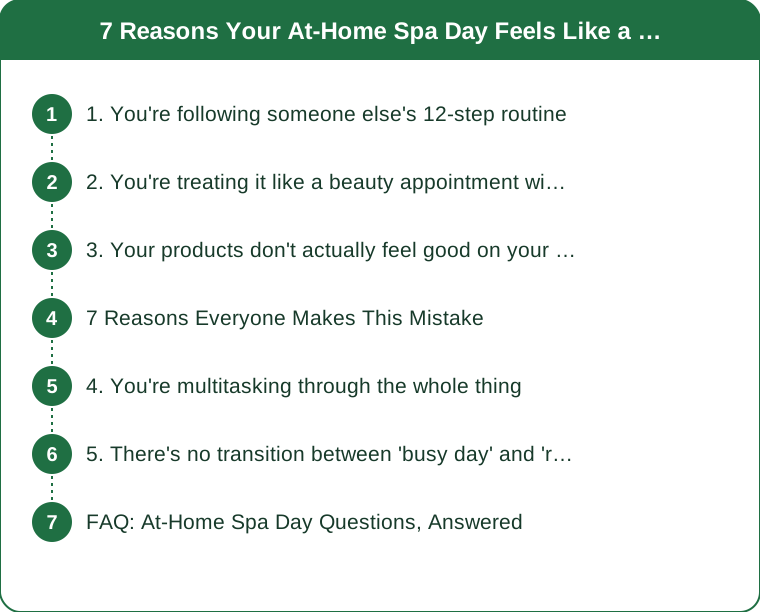
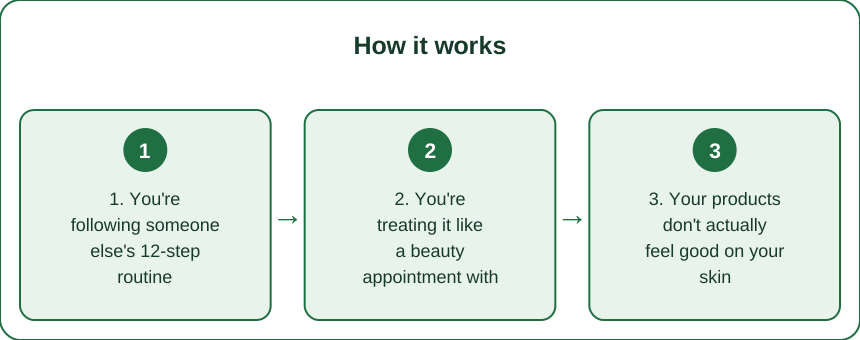
Pinterest routines with 12 sequential steps are designed to look impressive on camera, not to feel relaxing in real life. Cross-referencing serums and waiting exactly 90 seconds between layers is closer to a lab protocol than self-care. Cut to 3-4 steps you genuinely enjoy and skip the rest — fewer steps done slowly beats twelve done anxiously.
2. You’re treating it like a beauty appointment with a deadline
If you’re glancing at the clock because you ‘have’ to finish before a show starts, the time pressure alone kills the relaxation. Block real open-ended time, or don’t call it a spa night — call it a 15-minute mask and be honest about the scope. Mismatched expectations are the fastest way to make anything feel like a chore.
3. Your products don’t actually feel good on your skin
A mask that tightens uncomfortably or a scrub that stings isn’t relaxing no matter how good the packaging looks. If a step makes you wince, it’s not doing its self-care job — swap it out even if it was expensive or trendy. Comfort during the process matters as much as results after it.
7 Reasons Everyone Makes This Mistake
1. Copying routines built for content, not comfort — see reason 1. 2. No time buffer, just a rushed slot — see reason 2. 3. Products that physically don’t feel good — see reason 3. 4. Multitasking through it (phone in one hand, mask on with the other) defeats the entire purpose — pick one. 5. Cold room or bad lighting undercuts the sensory experience more than people expect; warmth and dim lighting do real psychological work. 6. No transition ritual — jumping straight from a stressful day into ‘relax now’ rarely works; even 5 minutes of just sitting first helps. 7. Treating results (glowing skin) as the point instead of the process itself, which sets you up to judge and rush rather than enjoy.
4. You’re multitasking through the whole thing
Scrolling your phone with a mask on isn’t a spa night, it’s just screen time with skincare as background noise. The relaxation response spa rituals are supposed to trigger requires actual attention — even 10 focused minutes beats 40 distracted ones.
5. There’s no transition between ‘busy day’ and ‘relax now’
Jumping straight from answering emails into a face mask rarely works, because your nervous system doesn’t switch that fast. A 5-minute buffer — just sitting, breathing, changing into comfortable clothes — makes the actual routine land differently.
FAQ: At-Home Spa Day Questions, Answered
How long should an at-home spa routine actually take?
There’s no required length — 20 minutes done attentively beats 90 minutes done while multitasking. Match the time to what you actually have, not to what routines online show.
Why does my skin look fine but I still don’t feel relaxed?
Because skincare results and relaxation are two separate outcomes. You can get good skin from a rushed routine and zero calm from it — if calm is the goal, the process matters more than the product list.
What’s the minimum for an at-home spa night to actually feel good?
Dim lighting, one skincare step you genuinely enjoy, phone away, and no clock-watching. That’s a lower bar than most guides suggest, and it works better than a 12-step list rushed through.
TL;DR:
- Cut routines to 3-4 steps you actually enjoy, not 12 steps built for photos
- Give it open-ended time — clock-watching kills relaxation faster than any product choice
- Put the phone away; multitasking turns self-care into background noise
- A 5-minute transition buffer between ‘busy day’ and ‘relax now’ matters more than people expect
The chore feeling almost never comes from the products — it comes from treating a relaxation ritual like a task with steps to complete.
Keep Reading
This article is for general informational and styling purposes only. Fit, sizing, and product availability may vary.